

Hey, I’m Darian.
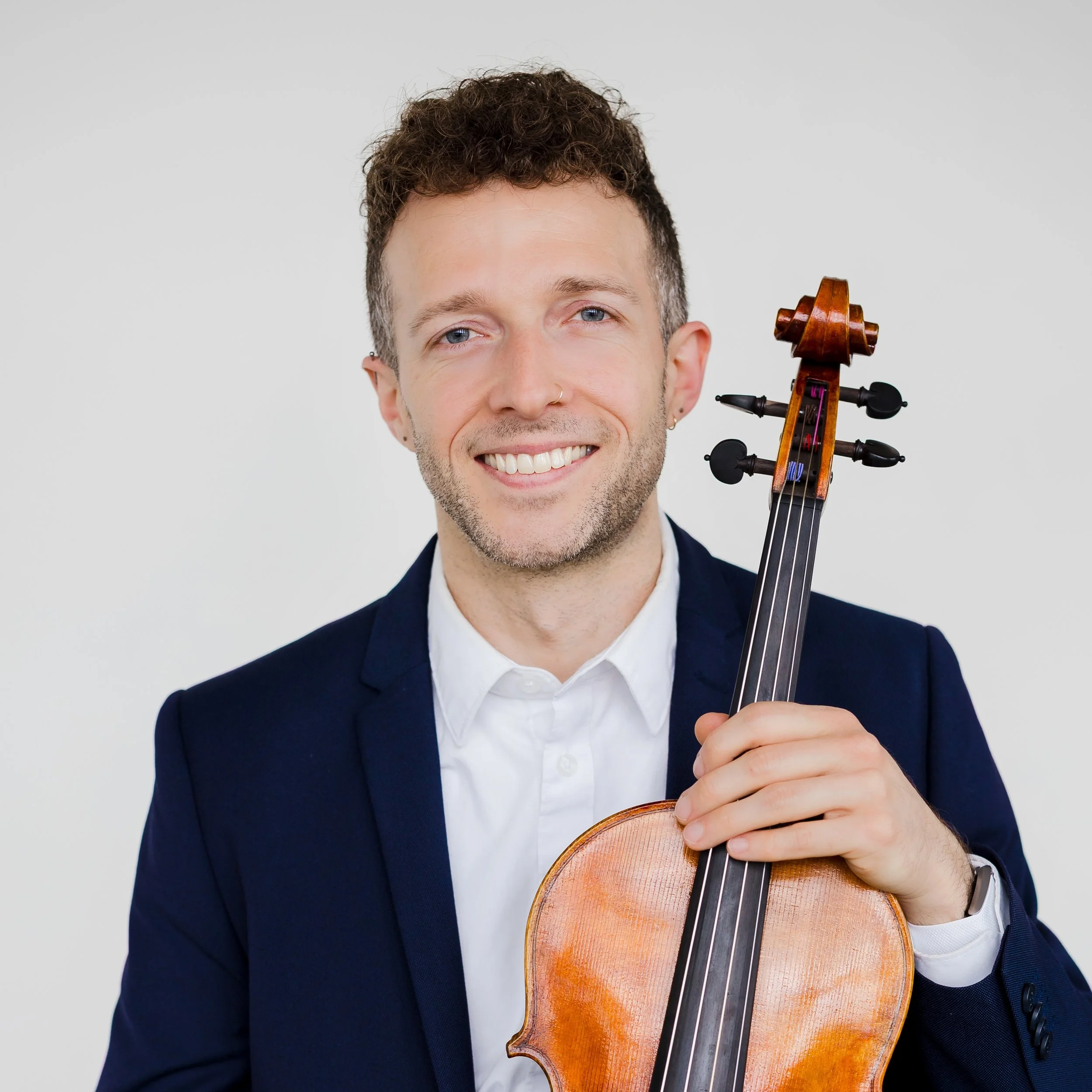
I teach the viola and violin, conduct a number of student youth orchestras, and offer clinics to school orchestras in Oregon and Washington.
Tenets & Core Concepts
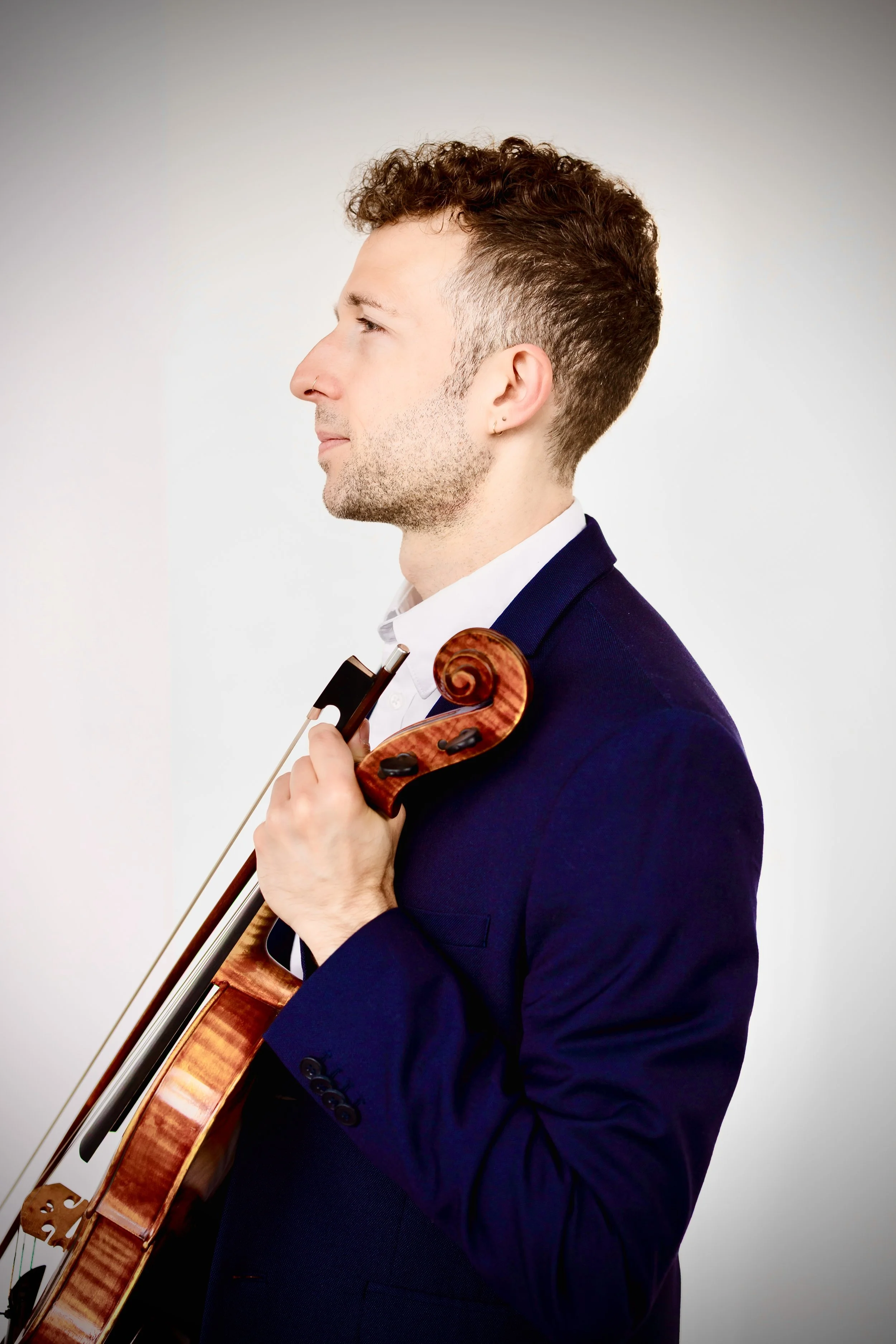
The Suzuki Approach or Talent Education Method focuses on: an early start at a young age; a nurturing positive learning environment; development of a natural focused ringing tone; learning to play the instrument before learning to read music; socialization and learning with peers in group classes; a common repertoire of pieces; involving families in lessons and home practice for student learning; and the belief that through music we build character, empathy, and kind hearts for our community.
The purpose of learning music is not to become a professional musician (though, for some, that’s important too!), but instead, our goal is to support young people in their development as life-long learners with kind hearts!
The Suzuki Approach
Studio Mission & Outcomes
Provide students with the tools and skills necessary for an evolving and changing musical world; Instill practices that create independent musicians; Foster a love of life-long musicianship and sharing; Build a community of musicians who support their colleagues and respect their audiences.
Students of Darian Todd have performed in Regional Honors Orchestras, All State Orchestras, won seats in local symphony orchestras, served as principals of viola and violin sections in such orchestras, received scholarships for musical artistry at universities, and continued to pursue efforts of musical outreach in the community with joy, gratitude, and connection.
Impact & Outreach.
Partnerships
Oregon Suzuki
Association (OSA)
The Oregon Suzuki Association works to foster connections between Suzuki teachers and their students throughout the state of Oregon.
Metropolitan
Youth Symphony (MYS)
The Metropolitan Youth Symphony offers a variety of ensemble experiences to students across a range of abilities throughout Portland and Hillsboro.
Young Musicians & Artists (YMA)
YMA's is an immersive arts experience summer camp that strengthens creative expression, builds confidence, and cultivates a sense of community.
What Students and Parents are Saying
"Not only have you taught me how to be a better musician, you’ve shown me how to be a better person in my community and to trust in myself with more confidence. Thank you for teaching!"
Jozlin E., Student
"Darian is a competent, consistent, and effective educator. He is versatile, adapting to each student's learning style. Darian has also imparted to our sons his love for music along with a respectful, professional, cooperative, and collaborative attitude."
Clio R., Parent
FAQ
-
When the orchestra teacher of your child's string program recommends private lessons, you may find yourself thinking, "why does my child need them?"
Here are just a few of the many reasons private lesson will help your child succeed in music:
Development of character skills
Learn how to practice outside of teacher contact
Foster independent learning and performing
Build confident artistry and ability
Non-parental adult support and encouragement
Overcoming obstacles independently (with personal, one-on-one, gentle guidance)
Improved time management skills
Problem solving strategies
Non-judgmental self-assessment and reflection
Development of self-discipline and self-regulation
Overcoming harmful habits
Encouragement of curiosity
Stimulation of creativity
-
Learning to play a musical instrument is like learning a language. When we learned to speak, we did so through constant exposure to words and sounds from our parents and surrounding. As we learned words, we continue to practice with them in new and more complex ways. You did not learn to say mom and then stop using after you had said it correctly once. As such, listening to music, and the pieces learned in lessons, and the review of polished pieces is an essential piece of the learning process. Committing to consistent listening and review creates the inevitability of success for children. They progress from skill to skill and piece to piece on their viola or violin with each new idea easily within reach. It is also important to remember that, generally, each new piece your child learns is 80% review of previous skills, and 20% new skills or musical ideas. Let that be your guiding principle when review and listening become laborious or tedious.
-
Observations can take place at any lesson. Prospective and new families in the studio are required to observe a minimum of two lessons and meet with me to get to know each other and establish a mutual understanding of what viola or violin study will look like.
During an observation, please arrive early and take a seat in the chairs provided. You may take notes on paper as you observe and write down any questions you have for our parent (practice partner) and teacher meeting after the lesson. Please refrain from talking or asking questions during the lesson to honor the time and learning that is taking place for the parent and child you are observing.
Current families agree to lesson observations. Please communicate with me if there are questions about this.
-
Studio activities and events take place between September and June, typically following the academic or school calendar.
Individual Lessons are 45 minutes in length, once per week.
Master Class or Group Class are 60 mins in length, 1-2 per month.
Studio Recitals, roughly one hour in length, take place in the winter (January) and summer (June).
Lessons typically do not occur in the months of July or August.
Students are encouraged to participate in a variety of music festivals and summer institutes to meet new families, experience new ensembles, and learn from the perspectives of new teachers
See the Upcoming Events Page for Summer Music opportunities
-
Lessons are scheduled through conversation with Darian (in-person or over the phone) after your observations and practice partner meetings have been completed.
-
Lesson Materials
The student must own, rent, or have access to the instrument studied in lessons. Also necessary for daily practice is; a metronome, shoulder rest, and a music stand. The student must bring a practice journal, etudes/studies, repertoire, appropriate warm-up materials, and instrument to every lesson.
Materials Purchase
For your convenience, I have access to most materials required for lessons. Before purchasing any equipment, instruments, or supplies; please talk with me first. I generally refer students to David Kerr Violin Shop: 4451 SE 28th Ave, Portland, OR 97202; www.kerrviolins.com for supplies and instruments. Some materials are only available online or by ordering in advance. Sheet music can typically by found on Alfred Music, www.alfred.com, or at Southwest Strings, www.swstrings.com.
-
Students
Arrive to your lesson ready to try new things, review skills and concepts from previous lessons, and make many, many attempts with a positive attitude and growth mindset.
Arrive to group class ready to follow instructions (given by parents and the teacher), respect the personal space of others (both physically and emotionally), and build trust in our community with your peers, and other parents, through your musical ability and artistry.
All students are expected perform on the Studio Recitals, both individually and in a group class piece.
Practice Partners (Parents/Care Givers)
Parents are expected to observe and participate in individual lessons, group class, and studio recital.
Lesson Participation
Parents are expected to attend lessons of students younger than 7th grade. All new parents in the studio should attend the first 2 to 4 lessons to take notes and build curiosity about their child's learning style and build a relationship with both teacher and child in the learning setting.
Take notes, write down practice assignments, ask clarifying questions (yes, even for spelling words!), and playing games with your child and teacher for practice at home.
Master Class or Group Class
Help the teacher with setup or take down of the space.
Help your child unpack and prepare for class.
Connect with other parents and build trust through conversation before and after class.
Observe your child and other children when interacting and learning in a group setting.
Participate with your child and the children in the studio when invited by the teacher.
Studio Recital
Show up early to the venue (maybe 30 mins before the start time).
Help your child and others unpack for tuning and finding their seat in the recital hall.
Help the teacher if items need to be moved or arranged at the recital hall.
Turn pages for the collaborative pianist (if that is something you are comfortable and experienced in)
General thoughts about lesson and practice:
When a student is very young, 30 minutes may be spent on “instruction” and the remaining time will be devoted to practice partner strategies and relationship building.
Avoid the use of electronic devices and other distracting items during our time together.
Advancing students may need additional time if preparing for an audition or working on longer repertoire. As such, the 45 minutes may be extended to 50/55 minutes as needed, with no additional charge.
It is important families commit to daily practice. The amount of time per day depends on each families schedule. I recommend striving to be no less than 15 minutes per day. Remember, practicing takes many forms.
Listening and Review are the most helpful things to do when you have limited time or energy.
-
Create a practice space that is distraction-free and encourages you to stay focused. This space should be well-lit, have quiet surroundings, no distractions (phones, tablets, laptops, siblings, pets, etc...)
Set and keep a consistent practice time. Having a routine makes it much easier to practice, even on those days when we might not feel like practicing. Talk about this with your parents to find a time that works for your family!
Practice regularly (everyday), even if it's just for 5 minutes. Regular, frequent practice is always better than a few, longer "cram" sessions.
Look for progress in little things and reinforce them with enthusiastic repetition. Congratulate yourself for specific things done well!
Record yourself. ALL. THE. TIME. This will give you a real version of how you played, not the filtered version we think we hear while playing.
Learning the notes & rhythms is just one element of your pieces, always remember to develop musical expression and beautiful tone during this process.
Review old pieces everyday, we are learning skill by skill, not piece by piece. Always think quality, not quantity.
Give home concerts often! Have you parents listen to your practice. Show them some of the tasks and skills you are learning through your current pieces.
Please Remember:
Give yourself 5,000 chances to succeed
Repetition is the key to mastery
Practice until you cannot get it wrong
Practice Makes Progress!
-
Commit Long-term: Learning to play an instrument can be compared to learning a language. It takes time and dedicated practice to see progress. As a parent, you can help your child by nurturing a growth mindset and center long-term goals.
Listen to Quality Recordings of the Suzuki Repertoire: The best way for your child to learn what a well-defined, characteristic tone on their instrument sounds like is to listen to quality music and performing artists. Using recordings with well mastered audio, properly synced video to audio, and appropriately credited musical artists helps you and your child create aural goals for practice and progress as you work together. I recommend families listen to their current working book and two books ahead of that book:
For example: If you are in book 1, get book 4 recordings at the same time and listen to those as well! You may not be playing that music yet, but you are exposing yourself to the language of music. We don’t learn language by only listening to the words will use today. We are constantly exposed to a variety of words and sounds we will learn and use for a lifetime.
https://www.alfred.com/suzuki-method-core-materials/b/
https://www.alfred.com/suzuki-method/suzuki-audio-downloads/
https://music.apple.com/us/album/suzuki-violin-school-vol-1/1532110255
https://music.apple.com/us/album/suzuki-viola-school-vols-1-2/869016839
Be an Active Participant: Your child will be more likely to practice efficiently and regularly if you take an active interest in what they are doing.
Take notes at the lesson, ask clarifying questions at appropriate times, watch how I do something in lesson to repeat with your child at home.
For older and more independent students: Pull up a chair and listen to them, away from electronic devices. Ask them questions like “what are you working on?”, “what parts are the most challenging for you?”, “what’s your favorite song or scale?”, “what is your favorite review piece?”, etc.
Remember…this may change and your “active” participation will evolve as your child grows and becomes more independent.
Encourage Regular Practice: If at all possible, encourage your child's practice time to be at the same time and place every day. Daily practice should be like brushing your teeth, seamlessly fitting into the daily routine.
Have Patience and A Positive Attitude: One of the most helpful (and most challenging) things to do is to have patience and a positive attitude as your child practices their instrument. You will hear many terrible and unrecognizable tunes as your child begins practicing their instrument regularly in the early stages. This will pass quickly with consistent practice!
Attend Live Performances whenever possible
-
Please make sure to use the following recordings when purchasing the requested book for violin or viola. For viola, the only option at this time, for most books, is William Preucil. For violin, please make sure to purchase the Hilary Hahn recordings.
-
The study of a musical instrument is incredibly valuable for all of us. It nurtures our personal growth and character development, enriches and sustains our shared culture, and builds bonds of community between all, both performers and audiences alike.
As such, I encourage all families to treat and view musical study as an investment, similar to that of a college fund, retirement account, or any other source of long-term stability and positive outcomes.
Studio Tuition for the 2026-2027 School Year:
$275 per month (10 months of lessons each school year)
This fee covers all lessons from September through June (roughly 35 weeks of lessons during the term), Group Classes, Recitals, and any parent and teacher meetings throughout the school year.
Additional lessons may be scheduled when there are open spaces available at the rate of $75 per lesson
Payment for lessons can be completed using Cash, Check, Venmo, and Zelle at the beginning of each calendar month.
An invoice, regardless of payment, will be sent at the end of each month to families. A receipt will be provided when payment is received for mutual record keeping.
-
Cancellations
A family who has a weekly lesson slot is committed to attending this lesson time for the entire school year.
I will not cancel our lesson times or attempt to rearrange these times for extra musical jobs, last minute performances, or other teaching engagement invitations throughout the year. I will strive to adhere to the calendar that is sent out at the start of each school year. I expect families to do their best to do the same.
There will be times when there are conflicts, times either you, your child, or I will be too sick to engage in music making. This is a natural part of our lives. I believe we all need the grace and freedom of a sick day without fear of lost resources, both educationally and financially.
As such, cancellations for credit or non-payment are not sustainable or appropriate.
Makeups
I do not offer make up lessons. There are a number of reasons for this (see the article below), the most important one being that life happens, to all of us!
If you are sick or away from town during your lesson time, I am happy to meet via Zoom for our lesson.
If you experience an emergency, please do not feel a need to text or call, I trust you will update me as you see fit AFTER the emergency has been resolved when you and your child are in a more regulated state. (Of course I will wonder what happened and be concerned for you! Though I think the most important thing is addressing the emergency. Our lesson should never feel like an emergency.)
If you are having trouble making it to your scheduled lesson, let’s talk so that we can address any recurring conflicts or changes in your regular routine that may be impacting your commitment to practice and studio participation. I am here to help and be an understanding partner in you and your child’s musical and character development.
For more on this idea, please take a moment to review this article.